
The Non-Thermal Effects of RF Radiation: What the FCC Guidelines Deliberately Ignore
Health Harmonic Newsletter
Archives
The Non-Thermal Effects of RF Radiation: What the FCC Guidelines Deliberately Ignore
SIGN UP FOR OUR NEWSLETTER
The Non-Thermal Effects of RF Radiation: What the FCC Guidelines Deliberately Ignore |
Why 5G infrastructure raises biological concerns that go far beyond heating tissue |
 |
Federal Communications Commission guidelines for radiofrequency radiation exposure rest on a single assumption: if electromagnetic radiation does not heat tissue, it cannot cause biological harm. This thermal-only paradigm, established in 1996 and unchanged since, ignores three decades of peer-reviewed research documenting non-thermal biological effects at exposure levels thousands of times below FCC limits.
The National Toxicology Program study, the largest animal study on radiofrequency radiation ever conducted, spent 30 million dollars documenting clear evidence of carcinogenicity from cell phone radiation exposure. Male rats exposed to levels mimicking heavy cell phone use developed malignant schwannomas (heart tumors) and gliomas (brain tumors) at statistically significant rates. The exposure levels used in the study were within FCC compliance limits.
Here is the rub: the FCC dismissed these findings by claiming the exposure levels were too high-despite those levels representing what millions of people experience daily through prolonged cell phone use. The agency protecting us from harmful radiation exposure rejected evidence of harm by claiming real-world exposure patterns were irrelevant.
The Ramazzini Institute in Italy replicated the National Toxicology Program findings using far lower exposure levels-intensities equivalent to living near a cell tower rather than holding a phone against your head. Their results showed the same tumor types appearing at exposure levels 1000 times lower than what the NTP used. The pattern of harm remained consistent across both studies despite vastly different exposure intensities.
Dr. Martin Pall, Professor Emeritus of Biochemistry at Washington State University, identified a specific mechanism for non-thermal RF radiation effects: voltage-gated calcium channels in cell membranes. Radiofrequency radiation activates these channels, triggering excessive calcium influx into cells. This cascade produces oxidative stress, DNA damage, and disrupted cellular signaling-all occurring at power densities far below what causes tissue heating.
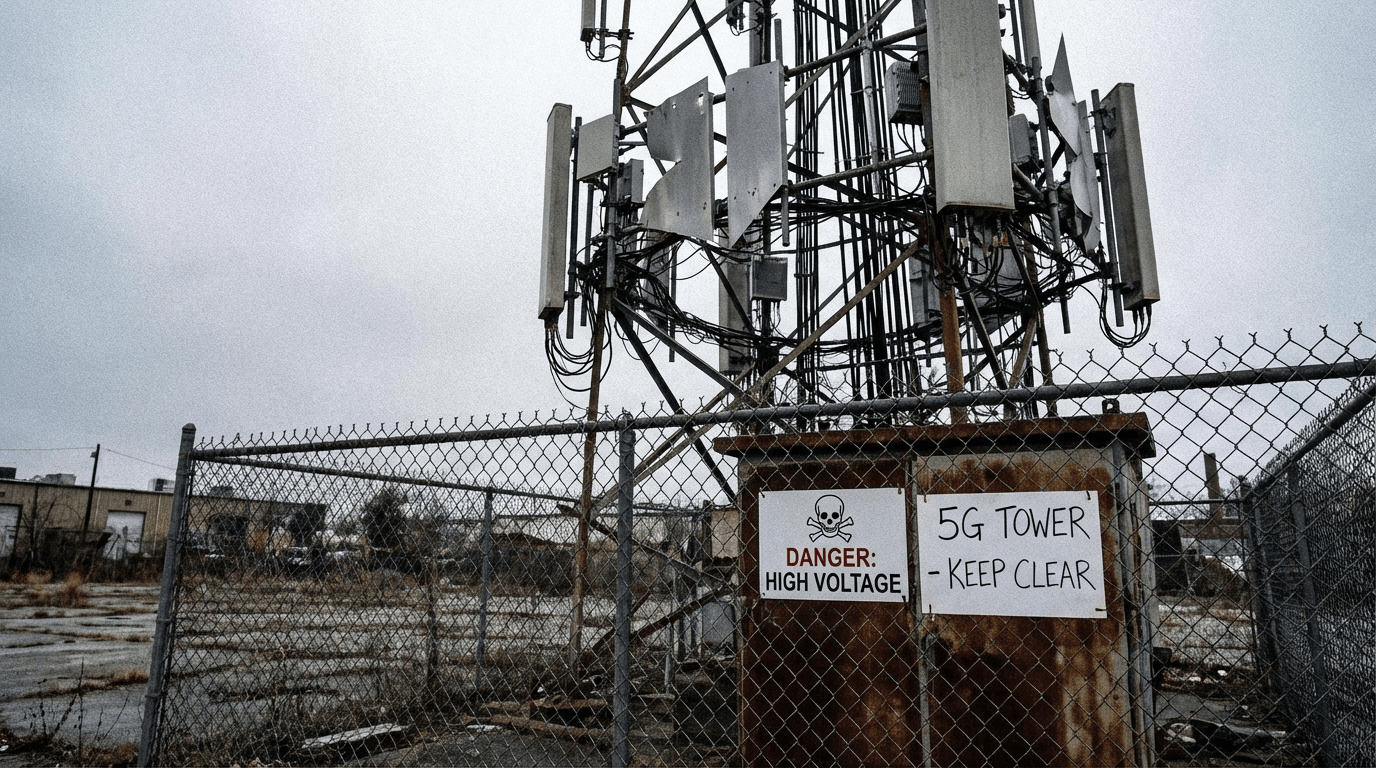
Keep in mind that 5G technology operates differently than previous generations of wireless infrastructure. The millimeter wave frequencies used in some 5G bands (24-100 GHz) interact with biological tissues in ways that lower frequencies do not. These wavelengths match the resonant frequencies of certain molecular structures, particularly the helical structures found in DNA and proteins. The biological implications of chronic exposure to these frequencies remain largely unexplored.
The originally intended 5G rollout would have required vastly denser infrastructure-small cell antennas mounted every few hundred feet rather than large towers spaced miles apart. This creates ubiquitous exposure at close range, eliminating the inverse square law protection that distance traditionally provided from radiofrequency sources. No long-term studies examined health outcomes from living in environments with this level of pervasive RF exposure.
Since that original rollout attempt, new lower frequency bands of so called 5G have been rolled out at least partially to save face for an industry plagued with failures. They failed to achieve the promised faster download speeds and pivoted to the latest attempt to sell new hardware to replace your 2 year old phone.
Research on electromagnetic field effects extends back decades. Studies document impacts on melatonin production, blood-brain barrier permeability, sperm motility, oxidative stress markers, and neurological function-all at exposure levels considered safe under current guidelines. The BioInitiative Report, a comprehensive review of over 1800 studies, concluded that existing safety standards are inadequate by several orders of magnitude.
After all, the organizations setting exposure standards receive funding from the telecommunications industry. The FCC is a regulatory body tasked with promoting spectrum use for commercial purposes, creating an inherent conflict of interest when evaluating health risks. The agency has not updated its exposure guidelines despite 30 years of accumulating research documenting biological effects below thermal thresholds.
The thing is, simple protective measures exist. Wired connections eliminate wireless exposure entirely. Air-tube headsets prevent RF radiation from traveling directly into the ear canal. Distance remains the most effective protection-keeping devices away from the body reduces exposure exponentially. Speaker mode for calls, airplane mode when not actively using wireless features, and ethernet cables for internet all dramatically reduce exposure.
The question is not whether radiofrequency radiation produces biological effects-the peer-reviewed literature documenting these effects spans thousands of studies across multiple decades. The question is why regulatory agencies continue pretending that only thermal effects matter when evaluating safety standards.
This represents more than academic debate. Understanding non-thermal RF radiation effects shifts the conversation from "Is 5G safe?" to "How do we maintain connectivity while minimizing biological exposure?" The technology provides genuine benefits, but pretending those benefits come with zero biological cost serves industry interests rather than public health.
Reduce your RF exposure with air-tube headsets from HealthHarmonic.com
References
1. National Toxicology Program. (2018). NTP Technical Report on the Toxicology and Carcinogenesis Studies in Rats Exposed to Whole-Body Radio Frequency Radiation. https://ntp.niehs.nih.gov/whatwestudy/topics/cellphones/index.html
2. Falcioni, L., et al. (2018). Report of final results regarding brain and heart tumors in Sprague-Dawley rats exposed from prenatal life until natural death to mobile phone radiofrequency field representative of a 1.8 GHz GSM base station environmental emission. Environmental Research, 165, 496-503. https://doi.org/10.1016/j.envres.2018.01.037
3. Pall, M. L. (2013). Electromagnetic fields act via activation of voltage-gated calcium channels to produce beneficial or adverse effects. Journal of Cellular and Molecular Medicine, 17(8), 958-965. https://doi.org/10.1111/jcmm.12088
4. BioInitiative Working Group. (2012). BioInitiative Report: A Rationale for Biologically-based Public Exposure Standards for Electromagnetic Fields. https://www.bioinitiative.org
5. Hardell, L., & Carlberg, M. (2015). Mobile phone and cordless phone use and the risk for glioma - Analysis of pooled case-control studies in Sweden, 1997-2003 and 2007-2009. Pathophysiology, 22(1), 1-13. https://doi.org/10.1016/j.pathophys.2014.10.001 |